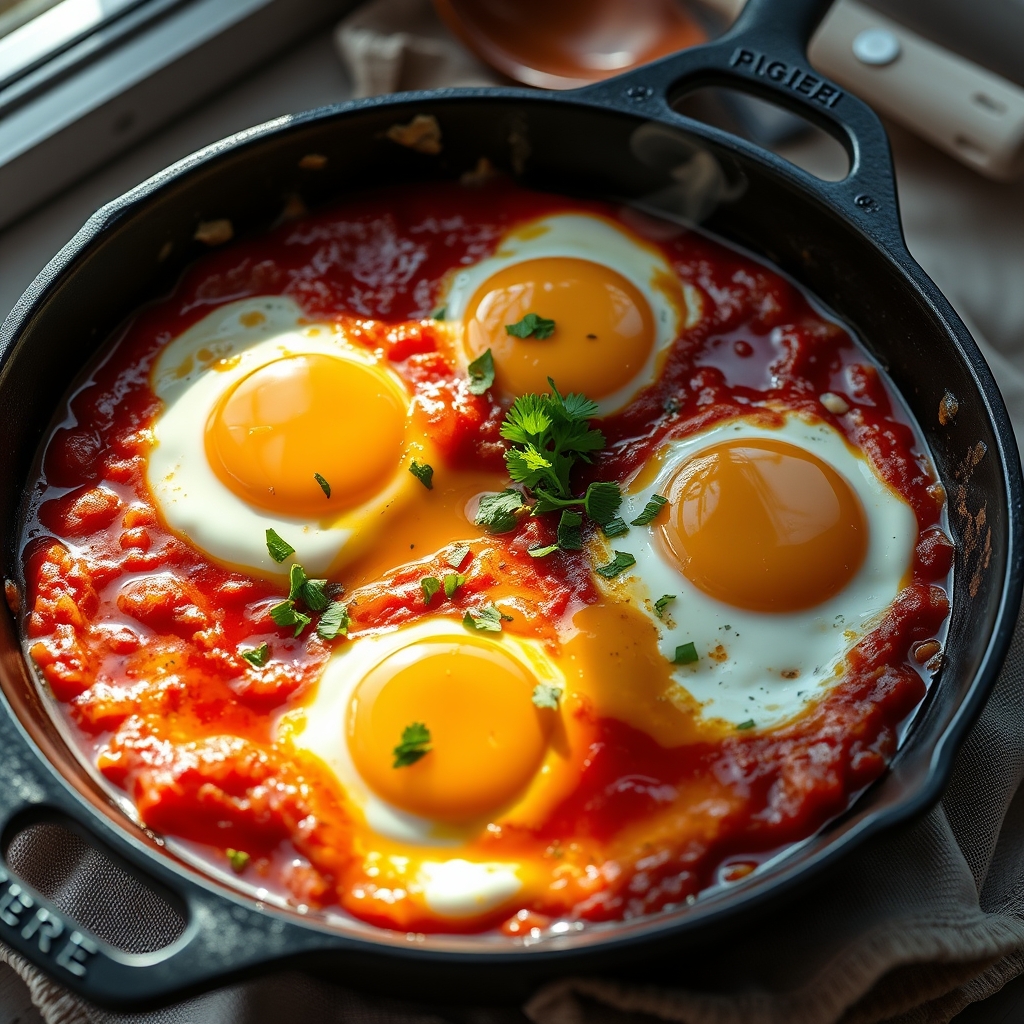

There are few dishes that embody the spirit of a lazy weekend morning quite like shakshuka. This North African and Middle Eastern staple—eggs gently poached in a spiced tomato and pepper sauce—has become a global brunch darling. But the version I’m about to share isn’t just any shakshuka. It’s baked, which transforms the texture: the sauce deepens in flavor as it caramelizes around the edges, the whites set perfectly without overcooking the yolks, and the feta melts into creamy pockets of tang. The crowning glory is a fragrant herb oil that brings freshness and vibrancy to every spoonful.
The first time I made baked shakshuka, it was a revelation. I had always stovetop-poached the eggs, nervously swirling the whites into submission. But baking changed everything. It’s hands-off, forgiving, and produces consistent results. The sauce, fortified with cumin and paprika, develops a jammy richness that only oven heat can coax out. And when you crack the eggs directly into the pan? There’s a satisfying ritual to it—like gemstones set into a mosaic. Pair it with crusty bread for dipping, and you’ve got a meal that feels both special and effortless.
Why This Recipe Works
The science behind baked shakshuka is simple: low, even heat in the oven gently cooks the egg whites while leaving the yolks runny. The sauce, when baked, undergoes the Maillard reaction along the edges—sugars from the tomatoes and onions caramelize, adding depth and sweetness. The feta, a high-moisture cheese, doesn’t dry out; instead, it softens and releases salty brine into the sauce. And the herb oil—a simple emulsion of oil, lemon, and parsley—cuts the richness and adds a fresh, aromatic lift. The key is to use a shallow pan (like a cast-iron skillet) to maximize surface area for caramelization and even egg cooking.
Ingredient Deep Dive
- Tomatoes: Use whole peeled canned tomatoes (preferably San Marzano) for a balanced sweetness and acidity. The juice helps create a luscious, saucy texture. Avoid crushed tomatoes—they can be too watery.
- Red Bell Pepper: Adds natural sweetness and a subtle crunch. Roasting it beforehand (or charring) enhances its flavor, but fresh works fine.
- Cumin & Smoked Paprika: The warm, earthy cumin and smoky paprika are the soul of this dish. Toast the cumin seeds first for maximum aroma.
- Feta: Choose a block of brine-cured feta (not crumbled) for a creamier melt. The saltiness counters the tangy tomatoes.
- Eggs: Large, fresh eggs are essential for perfect runny yolks. Farm-fresh eggs have vibrant yolks and firmer whites.
- Fresh Herbs: Parsley and cilantro (or mint) for the oil. Flat-leaf parsley is best; it’s less bitter and has a clean flavor.
- Extra-Virgin Olive Oil: Use a good-quality one for both cooking and the herb oil. It adds fruitiness and richness.
Masterclass Instructions
Step 1: Prepare the Herb Oil
In a small bowl, combine 1/4 cup extra-virgin olive oil, 2 tablespoons chopped flat-leaf parsley, 1 tablespoon chopped fresh cilantro (or mint), 1 teaspoon lemon zest, and 1 tablespoon fresh lemon juice. Whisk until emulsified. Season with a pinch of salt and pepper. Set aside to allow flavors to meld.
Step 2: Make the Sauce
Heat 2 tablespoons olive oil in a 10-inch cast-iron skillet or oven-safe pan over medium heat. Add 1 medium diced onion and a pinch of salt; cook until translucent, about 5 minutes. Add 1 diced red bell pepper; cook until softened, another 3 minutes. Stir in 3 minced garlic cloves, 1 teaspoon cumin seeds (or ground cumin), 1 teaspoon smoked paprika, and 1/2 teaspoon cayenne (optional). Cook until fragrant, about 30 seconds. Pour in 28 ounces (800g) whole peeled tomatoes, crushing them with your hands or a spatula. Add 1 teaspoon sugar, salt, and pepper. Simmer until thickened, about 15-20 minutes, stirring occasionally. The sauce should be thick enough to leave a trail when you drag a spoon through it.
Step 3: Assemble & Bake
Preheat oven to 375°F (190°C). Once the sauce is ready, taste and adjust seasoning. Turn off heat. Dot the surface with 4 oz (115g) feta cheese, cut into small cubes or crumbled. Use a spoon to make 6 small wells in the sauce, spaced apart. Crack one egg into each well. Season eggs with salt and pepper.
Transfer the skillet to the oven and bake for 12-15 minutes, or until egg whites are set but yolks are still runny. The exact time depends on your oven and desired doneness. For firmer yolks, bake 2-3 minutes longer. Rotate the pan halfway through for even cooking.
Step 4: Finish & Serve
Remove from oven and let rest for 1 minute. Drizzle the herb oil over the top. Sprinkle with extra fresh herbs (optional flaky sea salt and crushed red pepper). Serve directly from the skillet with warm crusty bread or pita. Pro tip: For a crispier bottom, broil for 1-2 minutes after baking—watch carefully to avoid burning.
Troubleshooting & FAQ
Can I make this ahead of time? The sauce can be made up to 3 days ahead and refrigerated. Reheat it before adding eggs and baking. The herb oil can be made a day ahead; keep at room temperature.
How do I prevent runny egg whites? Make sure the sauce is thick enough (not watery). Use fresh eggs, which have firmer whites. Create deep wells for the eggs to contain them.
Can I freeze baked shakshuka? Freezing is not recommended because the eggs will become rubbery upon thawing. However, you can freeze the sauce alone for up to 3 months.
My sauce is too runny, what should I do? Simmer longer before adding eggs. Alternatively, add 1-2 tablespoons tomato paste while cooking to thicken.
Can I use different cheeses? Yes, soft goat cheese, halloumi (crumbled), or even shredded mozzarella work. Adjust salt accordingly.
How can I make it spicier? Add chopped chili pepper or harissa to the sauce, or increase cayenne. Drizzle with sriracha after baking.