
Let’s be honest, roasting a whole chicken can feel a bit like a high-stakes gamble. Will the breast dry out before the thighs are cooked? Will the skin be gloriously crispy or sadly soggy? If you’ve battled these roast chicken demons, you’re in the right place! I’m going to walk you through a straightforward method that tackles all those common worries, leaving you with a bird so delicious, it’ll become your new go-to. And the best part? It’s easier than you think.
The Game Changer: Why Dry Brining Isn’t Just for Fancy Chefs
Okay, “dry brining” might sound a bit cheffy, but it’s basically just a fancy term for salting your chicken ahead of time. And trust me, this one step is a total game-changer for both flavor and that coveted crispy skin.
So, what’s the magic? The salt draws out excess moisture from the skin (hello, crispiness!) while also working its way deep into the meat, seasoning it from within and helping it stay wonderfully moist during cooking.
Here’s the super-simple plan: The night before you plan to roast, grab your chicken.
- Pat it Down: Use paper towels to pat the chicken thoroughly dry, inside and out. Get rid of as much surface moisture as you can. This is your first step towards crispy skin. While you’re at it, peek inside the cavity and remove any giblets or large pieces of fat.
- Salt Generously: Now, season it liberally with salt. And I mean generously. Cover all surfaces – the back, the breast, even a little sprinkle inside the cavity. Don’t forget some black pepper too!
- Chill Out: Place the seasoned bird on a wire rack set inside a baking sheet (this lets air circulate) and pop it into the fridge, uncovered. Let it hang out there overnight, or for up to 24 hours.
Pressed for time? Even a few hours of dry brining will make a noticeable difference. So, do what you can – an hour is better than nothing!
A Little Herb Magic Under the Skin
While we’re not going to stuff the main cavity (this can trap steam and make your chicken soggy), we can definitely add some aromatic deliciousness right where it counts – under the skin of the breast.
- Create a Pocket: Gently slide your fingers between the skin and the breast meat on both sides, creating little pockets. Be gentle, you don’t want to tear the skin.
- Tuck in Some Thyme: A few sprigs of fresh thyme tucked into these pockets work beautifully. The fat from the skin will render and baste the herbs and the breast meat as it cooks, infusing it with lovely flavor. You don’t need to add butter or oil here; the chicken skin has enough fat to do the job and get wonderfully crispy.
- Wing Tuck: To prevent the wing tips from burning (they’re small and cook fast!), just tuck them back and under the chicken, sort of lounging comfortably.
That’s it for prep! No need to fill the main cavity with lemons or onions – while it makes your kitchen smell nice, it adds moisture that can lead to a steamed, rather than roasted, bird.
Roasting to Perfection: It’s All About the Heat and a Couple of Flips
The secret to a chicken that’s juicy everywhere with evenly browned, crispy skin? A hot start and a couple of strategic flips.
- Preheat Everything: Get your oven cranked up to a hot 475°F (around 245°C). And here’s a pro tip: place your roasting pan (a cast-iron skillet is fantastic for this) into the oven while it preheats.
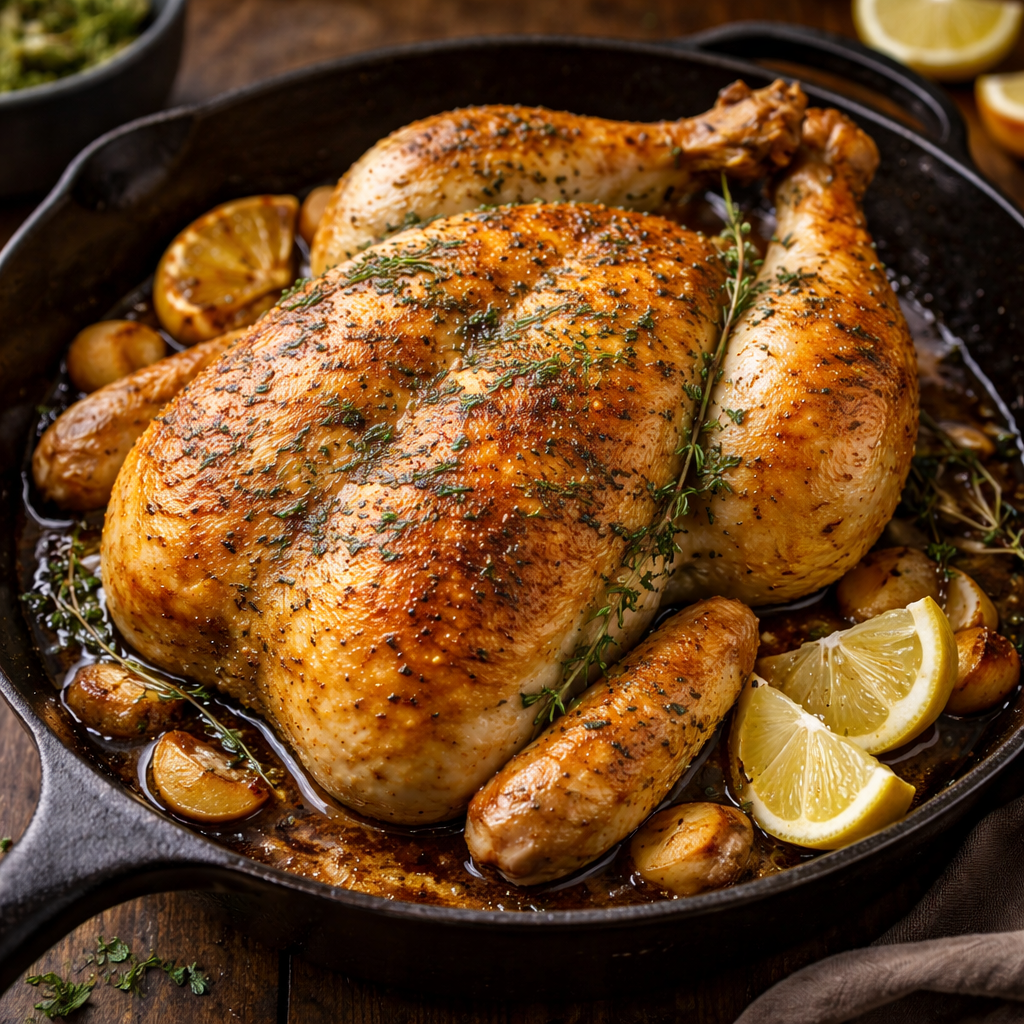
- Sizzle Start: Once the oven and pan are hot, carefully remove the pan. Add a thin layer of oil to the hot pan. Now, place your chicken in, breast-side up. That immediate sizzle when the chicken hits the hot pan? That’s the beginning of a beautiful sear and helps develop that crispy skin right from the get-go.
- First Roast & First Flip (Approx. 30 minutes): Slide it into the oven. After about 30 minutes, or when the top starts to get some nice golden color, it’s time for the first flip. Carefully take the chicken out and flip it so it’s breast-side down. Why? This allows the juices from the darker, fattier thigh meat to run down into the breast while it cooks, keeping it incredibly moist. It also helps the back and thighs cook evenly.
- Second Roast & Final Flip (Approx. 20-25 minutes breast-side down, then 5-10 minutes breast-side up): Pop it back in the oven breast-side down. Let it roast for another 20-25 minutes. For the grand finale and that perfectly crisped breast skin, flip it one last time so it’s breast-side up again for the final 5-10 minutes of cooking.
Don’t just rely on times! Every chicken and oven is a bit different. Look for visual cues – beautiful golden-brown skin all over. The most reliable way to check for doneness is with a meat thermometer. You’re looking for an internal temperature of around 155-160°F (68-71°C) in the thickest part of the breast. The temperature will continue to rise as it rests. For thighs, aim for 165-175°F (74-79°C).
The Art of Resting: Patience is a Virtue (and a Flavor Enhancer!)
Once your chicken looks like a golden masterpiece and hits the right temperature, take it out of the oven and transfer it to a cutting board. Now, this is crucial: let it rest for at least 10-15 minutes before you even think about carving. Tenting it loosely with foil is a good idea.
This resting period allows the muscle fibers to relax and reabsorb all those delicious juices. If you cut into it straight away, all that moisture will run out onto your board, and you’ll end up with drier meat. Patience, my friend!
Carving Your Creation (It’s Easier Than You Think!)
Carving a whole chicken can seem daunting, but a few simple cuts will have you serving it up like a pro. A good, sharp chef’s knife makes all the difference – it’s actually safer than a dull one!
- Legs & Thighs First: Gently pull a leg away from the body and slice through the skin connecting it to the breast. Find the joint where the thigh connects to the body and cut through it. You can then separate the drumstick from the thigh if you like, or keep them attached. Repeat on the other side.
- Wings Away: Find where the wing meets the breast and cut through the joint. They should come off easily.
- Breasts Last: Find the breastbone running down the center. Slice down one side of it, as close to the bone as possible, peeling the breast meat away from the carcass. Repeat for the other breast. You can then slice the breast meat across the grain into lovely serving pieces.
Don’t toss that carcass! The backbone and any remaining bits are packed with flavor – save them in the freezer for making amazing homemade chicken stock later.
Serve it Up and Take a Bow!
Arrange your beautifully carved, juicy, crispy chicken on a platter. A few sprigs of fresh thyme or some lemon slices tucked around make it look extra special. There are really no rules – just make it look inviting!
Roast chicken is such a wonderfully versatile dish. While I’ve shown you one way with simple thyme, feel free to experiment with different herbs and seasonings once you’ve mastered the technique. It’s a blank canvas for your culinary creativity!
Hopefully, this guide takes away any intimidation you might have felt about roasting a whole bird. It truly is an easy, incredibly rewarding process that can easily become part of your weekly dinner rotation. Enjoy every delicious, crispy, juicy bite!