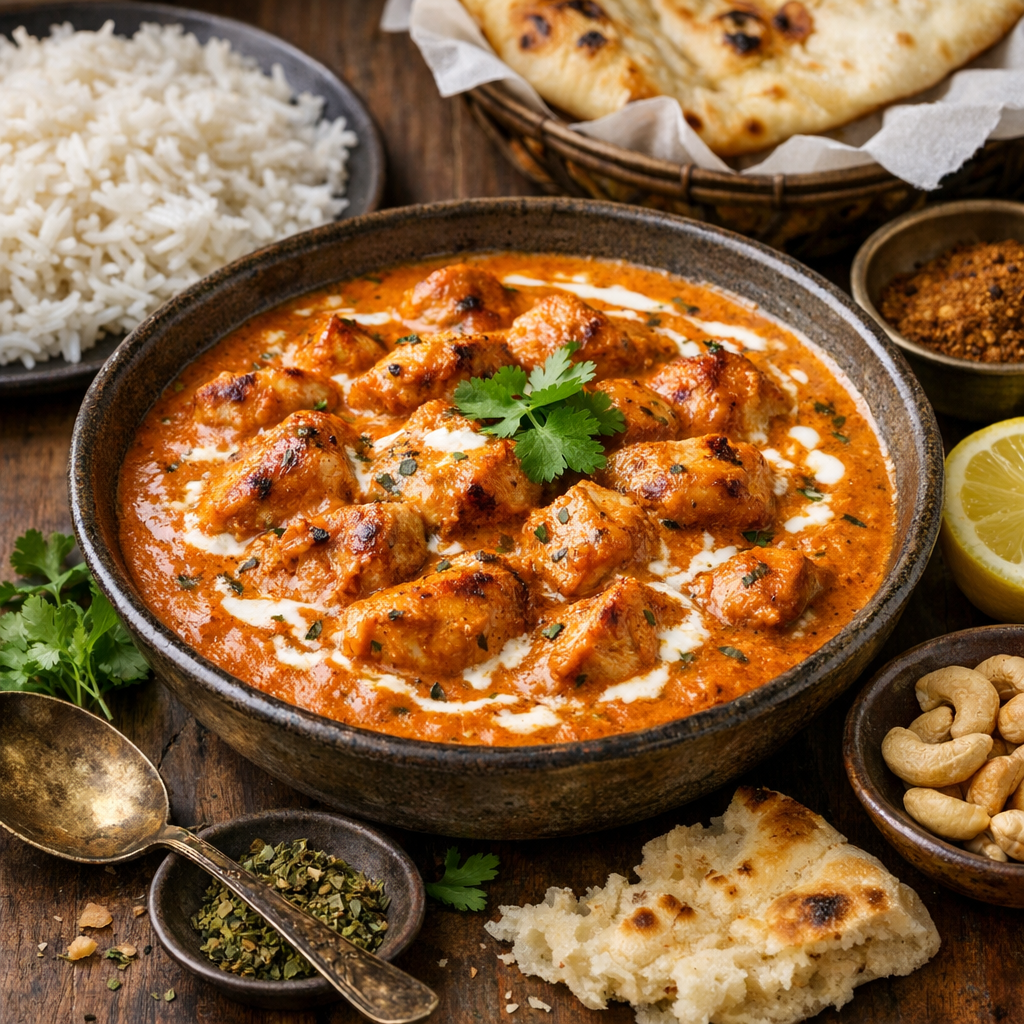

Butter chicken is one of those dishes that everyone thinks they know—until they taste one that’s actually done right.
If you’ve ever made butter chicken at home and ended up with something that tasted more like tomato soup with cream, or worse, dessert-level sweet, you’re not alone. The good news? Real butter chicken isn’t complicated, but it is about balance.
Let’s fix that.
What Butter Chicken Is (and What It Isn’t)
Authentic butter chicken, or murgh makhani, is rich but not heavy, creamy but not cloying, gently spiced but never overpowering. The sauce should hug the chicken, not drown it. And sweetness? It should whisper, not shout.
Most home versions go wrong because of:
- Too much sugar or honey
- Low-quality canned tomato sauce
- Skipping the marinade
- Cooking everything in one rushed step
We’ll avoid all of that.
Step 1: The Marinade (This Is Non-Negotiable)
Butter chicken starts before the pan hits the stove.
What you need:
- Boneless chicken thighs (they stay juicier than breasts)
- Plain yogurt
- Garlic and ginger (fresh, always)
- Garam masala
- Kashmiri chili powder or mild paprika
- Salt
- Lemon juice
The yogurt tenderizes the chicken while the spices sink in. Give it at least 4 hours, overnight if you can. This is where depth comes from.
👉 Tip: If you’re short on time, even 30 minutes is better than skipping it.
Step 2: Cook the Chicken Separately
This is a small step that makes a huge difference.
Instead of simmering raw chicken directly in the sauce:
- Grill it
- Broil it
- Or sear it hard in a hot pan
You’re not trying to cook it fully—just build flavor and light char. That slight smokiness is part of what makes butter chicken unforgettable.
Set it aside. Don’t wipe the pan.
Step 3: Build the Sauce Slowly
Here’s where most recipes rush and fail.
Start with:
- Butter (yes, real butter)
- A little neutral oil (prevents burning)
Add finely chopped onions and cook them slowly until golden—not brown. This takes patience but creates natural sweetness without sugar.
Add:
- Garlic and ginger paste
- Ground spices (coriander, cumin, mild chili)
Let the spices bloom in fat for 30–60 seconds.
Now add crushed tomatoes, not watery tomato sauce. Cook them down until the oil separates slightly. This step removes acidity and concentrates flavor.
Step 4: Cream, Cashews, and Balance
Instead of dumping in a cup of cream:
- Add a small handful of blended cashews or
- A few tablespoons of cream, not both heavily
Cashews add body without sweetness. Cream adds silkiness.
Taste before adjusting.
If it tastes flat:
- Add salt
If it tastes sharp:
- A pinch of sugar (seriously, a pinch)
If it tastes heavy:
- A splash of water or chicken stock
Balance is the goal.
Step 5: Bring It All Together
Add the cooked chicken to the sauce and simmer gently for 10 minutes. Finish with:
- A knob of butter
- Crushed dried fenugreek leaves (kasuri methi) if available
That last ingredient is optional but magical.
How to Serve It Right
Butter chicken shines when paired simply:
- Steamed basmati rice
- Warm naan or roti
- A squeeze of lemon at the table
Don’t overload the plate. Let the dish breathe.
Final Thoughts
Great butter chicken isn’t about secrets or shortcuts—it’s about respect for the process. When done right, it’s comforting, elegant, and deeply satisfying without being heavy or sweet.
Once you nail this balance, takeout won’t stand a chance.