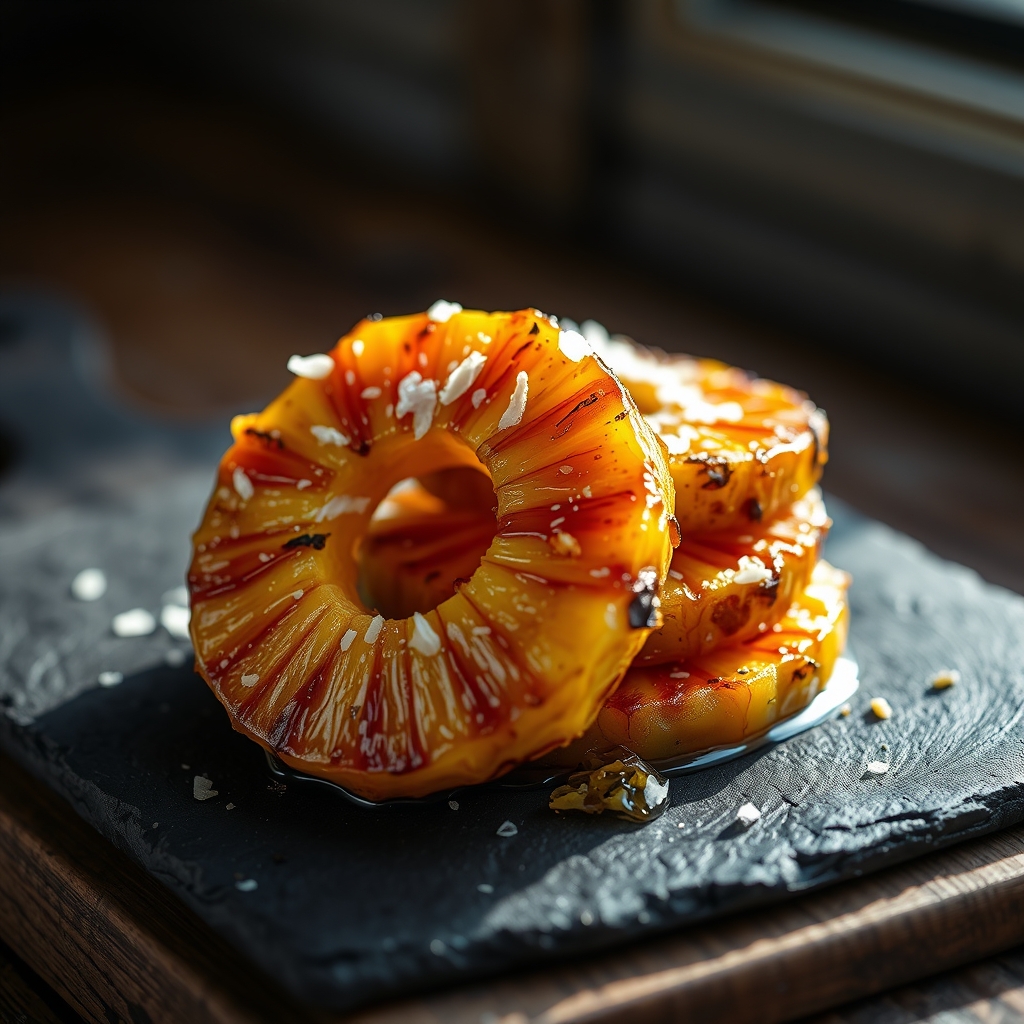

I remember the first time I tasted roasted pineapple. It was at a small beachside shack in Costa Rica, where the owner, a weathered woman with a kind smile, handed me a skewer of pineapple that had been caramelized over an open flame. The sugars had darkened into a smoky, sticky crust, and a squeeze of lime cut through the sweetness with a bright, acidic jolt. That simple moment—the contrast of char and citrus, the tropical perfume mingling with sea air—stayed with me for years. Back home, I became obsessed with recreating that balance: the way heat transforms pineapple from a juicy, sharp fruit into something deeply complex, almost buttery, with concentrated sweetness and a hint of smoke. This recipe, Roasted Pineapple with Honey, Lime & Toasted Coconut, is my tribute to that memory. It’s a dessert that feels both exotic and comforting, and it’s deceptively simple to make—yet each ingredient plays a crucial role in building layers of flavor.
Why This Recipe Works
The magic of this dish lies in the Maillard reaction and caramelization. When pineapple is exposed to high, dry heat (around 425°F/220°C), its natural sugars—primarily sucrose, glucose, and fructose—begin to brown and develop hundreds of new flavor compounds. At the same time, the fruit’s high water content evaporates, concentrating its sweetness and creating a tender, succulent texture. Roasting also tames the enzyme bromelain, which can cause a tingling sensation in raw pineapple, making the fruit mellow and silky.
Honey, with its blend of glucose and fructose, caramelizes at a lower temperature than table sugar, so it helps create a glossy, amber glaze without burning. The acidity in lime juice balances the sweetness and prevents the honey from becoming cloying; it also reacts with the pineapple’s pH to brighten the overall flavor. Toasted coconut adds a contrasting crunch and a nutty, toasted aroma that complements the caramelized fruit. The combination of these elements—heat, acid, fat, and sugar—creates a perfectly balanced dessert where no single note overwhelms the others.
Ingredient Deep Dive
- Pineapple: Choose a ripe pineapple that yields slightly to pressure and smells fragrant at the stem end. The fruit should be golden-yellow, not green. Underripe pineapple won’t soften enough during roasting and may be too tart. Look for one with vibrant green leaves, as they indicate freshness.
- Honey: Use a mild, floral honey like orange blossom or clover. Stronger honeys (e.g., buckwheat) can overpower the pineapple. Honey not only sweetens but also helps the fruit caramelize and adds a subtle floral note that melds with the tropical pineapple.
- Lime: Fresh lime juice is non‑negotiable. Bottled juice lacks the bright, aromatic acidity and contains preservatives that can alter flavor. Lime zest, added after roasting, provides a burst of essential oils that lift the dish.
- Unsweetened shredded coconut: Toasting this myself ensures it’s fresh and deeply nutty. Pre‑toasted coconut often tastes stale or artificial. The coconut adds a textural counterpoint—crisp against the tender pineapple—and its natural oils carry flavor.
- Butter (optional but recommended): A small amount of unsalted butter brushed onto the pineapple before roasting encourages browning and adds a rich, savory note that rounds out the sweetness.
Masterclass Instructions
Step 1: Preparing the Pineapple
Preheat your oven to 425°F (220°C) with a rack in the middle position. Using a sharp chef’s knife, slice off the top and bottom of the pineapple. Stand it upright and carefully cut away the skin, following the curve of the fruit. Remove any remaining “eyes” (the brown spots) by carving shallow V‑shaped grooves. Cut the pineapple crosswise into 1‑inch (2.5 cm) thick rounds. Do not core them yet—the core helps the rings hold their shape during roasting. Pat the rings dry with paper towels to remove excess moisture; this promotes browning.
Pro Tip: If you like, you can leave the skin on for a more rustic look, but it may become tough. For even cooking, try to cut the slices uniformly thick.
Step 2: Creating the Glaze
In a small bowl, whisk together 3 tablespoons honey, 2 tablespoons fresh lime juice (from about 1 lime), and 1 tablespoon melted unsalted butter (optional). Set aside 1 tablespoon of this mixture for basting later. If you’re not using butter, simply mix honey and lime juice. The glaze is thin now but will thicken as it caramelizes.
Step 3: Roasting the Pineapple
Line a baking sheet with parchment paper or a silicone mat. Place the pineapple rings in a single layer, not touching. Brush the tops with the glaze (not the reserved portion). Roast for 15 minutes. Remove the pan, flip the rings carefully with a spatula, and brush the other side with the remaining glaze (again, not the reserved). Roast for another 10–15 minutes, until the pineapple is tender, translucent at the edges, and deeply caramelized in spots. The sugars should bubble and darken to a rich amber.
Pro Tip: If your oven runs hot, check at 10 minutes. The goal is caramelization, not burning. If the pan juices start to smoke, add a splash of water to deglaze. The juices will reduce into a syrupy sauce.
Step 4: Toasting the Coconut
While the pineapple roasts, toast 1/4 cup unsweetened shredded coconut in a dry skillet over medium heat. Stir constantly with a spatula for 2–4 minutes, until the coconut turns golden and smells nutty. Immediately transfer to a plate to cool—it will continue to brown from residual heat.
Step 5: Finishing Touches
Transfer the roasted pineapple rings to a serving platter. Drizzle any remaining pan juices over the top. Sprinkle with the toasted coconut and a pinch of flaky sea salt (optional, but it enhances sweetness). Grate a little fresh lime zest (about 1/2 teaspoon) over the dish for a fragrant finish. Serve warm, as is, or with a scoop of vanilla ice cream, whipped cream, or Greek yogurt.
Pro Tip: For a boozy twist, flambe the pineapple with a splash of dark rum before adding the coconut. Use caution: tilt the pan away from you and ignite with a long lighter.
Frequently Asked Questions
Can I use canned pineapple? Fresh is best, but in a pinch, use drained canned rings (not chunks) and reduce roasting time to 10–15 minutes total, as they are already tender.
How do I fix a runny sauce? If the pan juices are too thin, pour them into a small saucepan and simmer over medium heat until thickened, about 2 minutes. Alternatively, whisk in 1/2 teaspoon cornstarch mixed with 1 tablespoon water.
Can I freeze the roasted pineapple? Yes, but the texture will be softer upon thawing. Freeze the cooled rings in a single layer on a baking sheet, then transfer to a zip‑top bag. Reheat in a 300°F oven for 5–7 minutes, then add fresh coconut and zest.
What if my pineapple is too tart? Sprinkle a little brown sugar over the rings before roasting, or add an extra tablespoon of honey to the glaze.
Can I grill the pineapple instead? Absolutely. Preheat a grill to medium-high. Grill the slices for 4–5 minutes per side, brushing with glaze. The smoky char adds another layer of flavor.