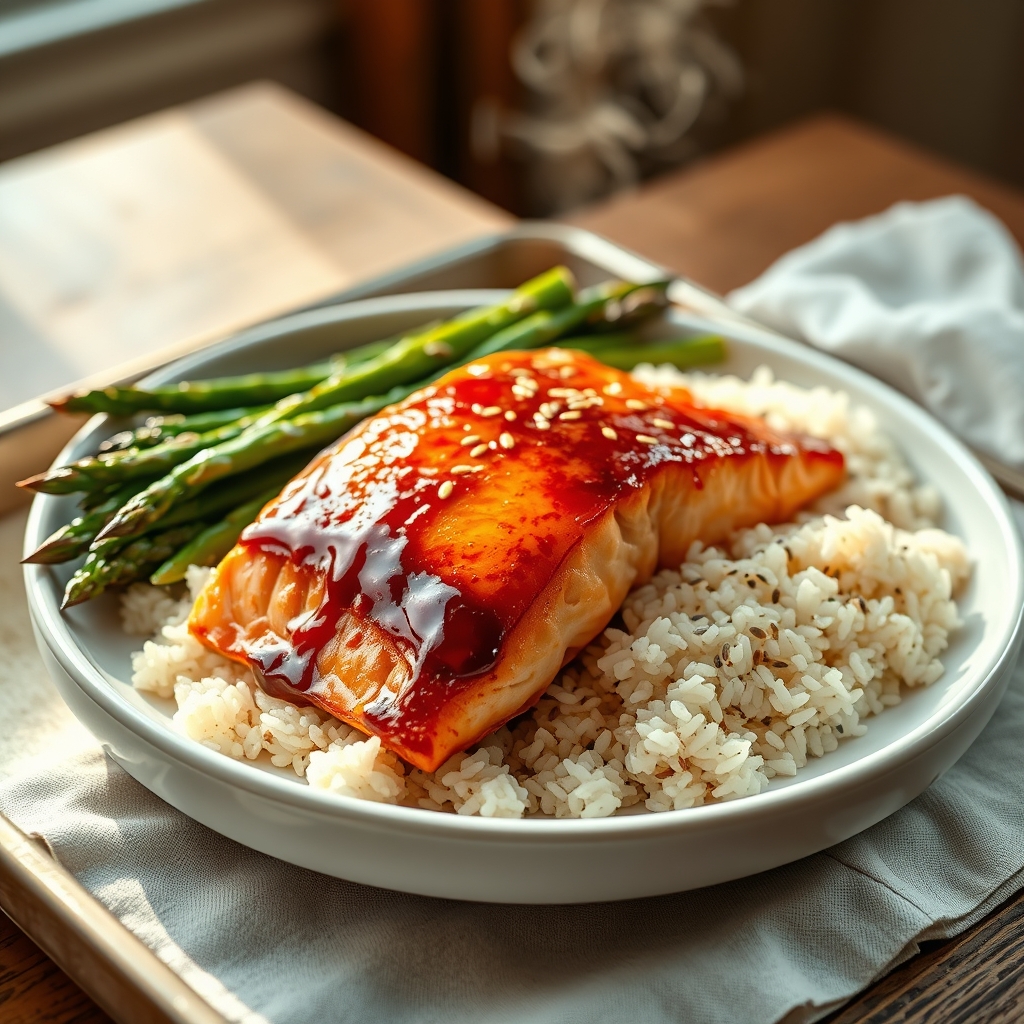

I remember the first time I attempted to make teriyaki salmon. It was a disaster—a sticky, burnt mess that fused to the pan and tasted like regret. That was before I discovered the sheet pan method. Now, this Sheet Pan Teriyaki Salmon with Asparagus & Sesame Rice is my go-to for busy weeknights when I want something that feels special but requires minimal cleanup. The magic happens on a single pan: the salmon glazes to a shiny, caramelized perfection; the asparagus roasts until tender-crisp; and the rice—fluffy, fragrant with sesame—soaks up every last drop of the savory-sweet sauce.
Why This Recipe Works
This recipe is built on two key techniques: high-heat roasting and efficient timing. The teriyaki sauce relies on a balance of soy sauce (for saltiness), mirin (for sweetness and shine), and rice vinegar (for acidity). When exposed to high heat (425°F), mirin caramelizes quickly, creating a lacquered glaze that seals in the salmon’s moisture. No need for searing; the oven does all the work. Furthermore, by starting the salmon on a lower rack and finishing under the broiler, you achieve crispy edges without overcooking the interior.
The sheet pan acts as a heat conductor, ensuring the asparagus roasts evenly alongside the fish. The key is to cut the asparagus to uniform thickness so they finish at the same time. Meanwhile, the rice is cooked separately but gets a boost of flavor from toasted sesame oil and sesame seeds. The result is a harmonious plate where every component is cooked perfectly—no juggling multiple pots and pans.
Ingredient Deep Dive
- Salmon fillets (skin-on or skinless): Choose wild-caught for a firmer texture and richer flavor. The fat content (about 10–15%) keeps the fish moist under high heat.
- Low-sodium soy sauce: Provides the umami base without overpowering saltiness. If you go full-sodium, reduce the amount slightly.
- Mirin: A sweet Japanese rice wine. It gives teriyaki its signature glossy sheen and balances the soy sauce. No mirin? Mix 2 tablespoons sake + 1 tablespoon sugar (but the shine won’t be as good).
- Rice vinegar: Adds a subtle tang that cuts through the richness of the salmon and caramelized sugar.
- Fresh ginger (grated): Use a Microplane for the juice and fine pulp. It adds warmth and a peppery zing.
- Garlic (minced): Fresh, not powdered. It adds depth that rounds out the sauce.
- Brown sugar (optional): A tablespoon boosts caramelization for a deeper color. Skip if you prefer a more savory teriyaki.
- Asparagus: Look for bright green stalks with tight tips. Thicker stalks hold up better to high heat.
- Sesame oil (toasted): Used for the rice—its nutty aroma transforms plain rice into a side dish.
- Sesame seeds: Toasted white or black; adds texture and visual appeal.
- Jasmine or short-grain rice: The starch content creates a sticky, cohesive texture that clings to the sauce.
Masterclass Instructions
Prepare the Teriyaki Sauce
In a small bowl, whisk together ⅓ cup low-sodium soy sauce, ¼ cup mirin, 2 tablespoons rice vinegar, 1 teaspoon grated fresh ginger, 2 minced garlic cloves, and 1 tablespoon brown sugar (if using). Set aside 2 tablespoons for drizzling later. This sauce is your flavor powerhouse. Pro tip: Taste it now—it should be savory, sweet, and tangy in equal measure. Adjust with a pinch of salt or extra sugar if needed.
Marinate the Salmon
Place 4 (6-ounce) salmon fillets in a shallow dish and pour the remaining sauce over them. Turn to coat. Cover and refrigerate for 15–30 minutes. Do not go longer; the acid in the vinegar can start to “cook” the fish. Meanwhile, preheat your oven to 425°F (220°C) with one rack in the middle and one at the top (for broiling later).
Cook the Rice
In a medium saucepan, combine 1 cup jasmine rice, 1½ cups water, and a pinch of salt. Bring to a boil, reduce to low, cover, and cook for 15 minutes. Remove from heat and let stand, covered, for 5 minutes. Fluff with a fork and stir in 1 tablespoon toasted sesame oil and 1 tablespoon toasted sesame seeds. Cover to keep warm.
Roast the Salmon & Asparagus
Line a large rimmed baking sheet with parchment paper. Arrange the marinated salmon fillets skin-side down (if using skin-on) on one half of the sheet. On the other half, place 1 pound asparagus, trimmed. Drizzle the asparagus with 1 tablespoon olive oil and season with salt and pepper. Toss to coat. Pro tip: For even cooking, group asparagus by thickness and fan them out in a single layer.
Roast on the middle rack for 8–10 minutes (depending on fillet thickness). The salmon should be opaque at the edges but still slightly translucent in the center (it will continue cooking). Switch the oven to broil and move the pan to the top rack. Broil for 2–3 minutes, until the sauce bubbles and the salmon edges crisp. Watch carefully—sugar burns quickly!
Assemble and Serve
Spoon the sesame rice onto plates. Arrange a salmon fillet over the rice and pile the asparagus alongside. Drizzle with the reserved 2 tablespoons of sauce. Garnish with sliced scallions and extra sesame seeds. Serve immediately.
Troubleshooting & FAQ
Q: Can I freeze the cooked salmon?
Yes. Cool completely, then wrap tightly in plastic wrap and foil. Freeze for up to 2 months. Reheat gently in the oven at 300°F to avoid drying out. The asparagus will soften, so consider adding fresh steamed asparagus when serving.
Q: How do I fix a runny teriyaki sauce?
If your sauce is thin, simmer it in a small saucepan over medium heat for 2–3 minutes to reduce and thicken. For an even thicker glaze, stir in a slurry of 1 teaspoon cornstarch mixed with 2 teaspoons water, then simmer until syrupy.
Q: My salmon is overcooked. How to prevent that?
Salmon continues to cook off the heat. Remove it from the oven when it’s just barely opaque in the center (125°F internal temp for medium). Carryover cooking will bring it to 130–135°F. Also, fillet thickness matters—aim for 1-inch thick pieces and adjust time accordingly.
Q: Can I use frozen salmon?
Yes, but thaw completely in the refrigerator overnight. Pat very dry with paper towels to avoid steaming instead of roasting. The marinade will be slightly diluted, so increase the soy sauce by 1 tablespoon.
Q: What can I substitute for mirin?
Combine 2 tablespoons sake or dry white wine with 1 teaspoon sugar. This won’t caramelize as nicely but still tastes great.
Q: The asparagus is limp. What went wrong?
You likely overcrowded the pan or cut the spears too thin. Spread them in a single layer with space between. For thicker spears, roast a few minutes longer before broiling. Alternatively, blanch briefly before roasting to lock in color.