
It was a late-night craving that started it all: the memory of a Korean taco truck in Los Angeles, where the lines stretched around the block and the air smelled of sweet soy, sesame, and charred meat. The owner, a tiny woman with a gentle smile, would hand over a warm corn tortilla filled with impossibly tender beef, a tangle of crunchy slaw, and a drizzle of spicy mayo. “Eat,” she’d say. “No talk.” That first bite was a revelation—a collision of cultures and flavors that felt both familiar and exotic. Now, you can recreate that magic at home with barely any effort. Let your slow cooker do the heavy lifting while you whip up a lightning-quick pickled slaw that cuts through the richness like a jeweled sword.
Why This Recipe Works
The secret to melt-in-your-mouth Korean BBQ beef lies in two key techniques: low-and-slow braising and acidic finishing. By cooking the beef in a slow cooker at a gentle simmer (around 200°F), the tough collagen in chuck roast slowly converts to gelatin, creating a silky, shreddable texture. The soy, brown sugar, and pear (yes, pear!) work together to tenderize and build layers of savory-sweet flavor. But the real trick is the quick pickled slaw: a hit of rice vinegar and sugar creates a tangy contrast that brightens the rich, unctuous beef. The slaw also adds a satisfying crunch that complements the tender shredded meat. No long marinating or finicky steps—just set the slow cooker and go.
Ingredient Deep Dive
Beef Chuck Roast: This tough, well-marbled cut is ideal for slow cooking. When cooked low and slow, the fat renders and the meat becomes fall-apart tender. Look for a roast with good marbling (small white streaks throughout).
Korean Soy Sauce (Ganjang): Thinner, saltier, and slightly sweeter than Chinese soy sauce. It forms the backbone of the marinade. Use a quality brand; it makes a difference.
Asian Pear: This bulbous fruit contains enzymes that naturally tenderize meat. Plus, it adds a subtle sweetness that balances the savory soy. If you can’t find Asian pear, use Bosc pear or grated apple.
Gochujang: Korean chili paste that brings deep, complex heat. It’s thick, savory, and slightly sweet. To adjust spiciness, mix with gochugaru (Korean chili flakes) or start with less.
Sesame Oil: A little goes a long way. Use toasted sesame oil for its nutty aroma; never substitute with light sesame oil.
Rice Vinegar: Milder than distilled white vinegar, it adds bright acidity without overpowering. Do not skip; it’s crucial for the slaw.
Masterclass Instructions
Step 1: Prep the Marinade
In a medium bowl, whisk together ½ cup low-sodium soy sauce, ¼ cup brown sugar, 2 tablespoons gochujang, 1 tablespoon sesame oil, 5 minced garlic cloves, 1 tablespoon grated ginger, and ½ cup pear purée (peel and grate half an Asian pear). This is your flavor base. Taste it: it should be savory, sweet, and a little spicy.
Step 2: Sear the Beef (Optional but Recommended)
Pat a 3-pound boneless beef chuck roast dry with paper towels. Season generously with kosher salt and black pepper. Heat 1 tablespoon canola oil in a large skillet over medium-high until shimmering. Sear the roast on all sides (about 4 minutes per side) until deeply browned. This step builds incredible flavor through the Maillard reaction. Transfer the roast to a slow cooker.
Step 3: Slow Cook to Perfection
Pour the marinade over the beef. Add ½ cup beef broth (use low-sodium) and half a medium onion, sliced. Cover and cook on LOW for 8-9 hours or HIGH for 5-6 hours, until the beef shreds easily with two forks.
Pro tip: For a thicker sauce, remove the beef after cooking and transfer the liquid to a small saucepan. Simmer over medium heat for 10 minutes until reduced by half. This concentrates the flavors and creates a glossy glaze.
Step 4: Make the Quick Pickled Slaw
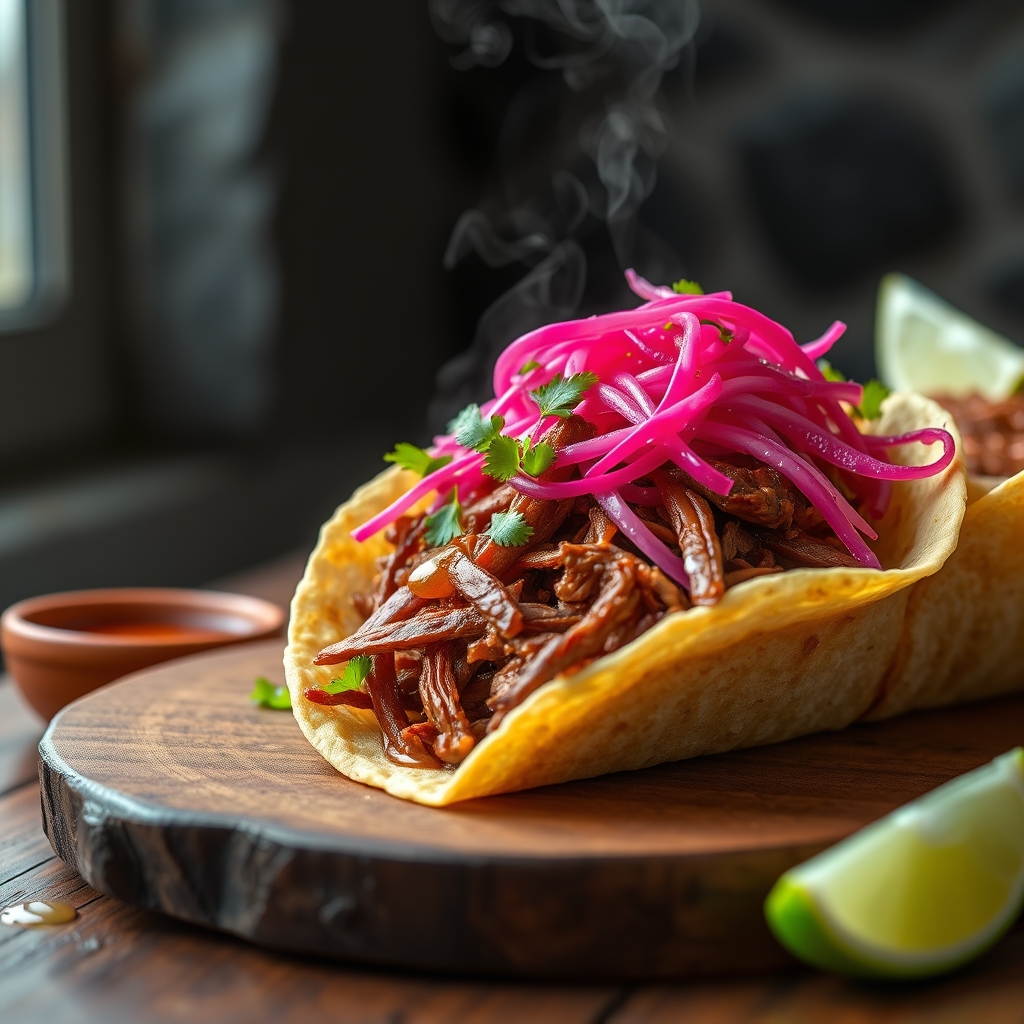
While the beef cooks, prepare the slaw. In a large bowl, whisk together 3 tablespoons rice vinegar, 1 tablespoon sugar, 1 tablespoon neutral oil, and ½ teaspoon kosher salt until sugar dissolves. Add 4 cups thinly shredded red cabbage and 2 thinly sliced scallions. Toss to coat. Let sit at least 30 minutes (or up to 2 hours) to pickle slightly. The cabbage will soften and turn a vibrant pink.
Step 5: Assemble the Tacos
Warm 12 small corn or flour tortillas (or double-layer corn for extra strength). Shred the beef with two forks and toss with a few tablespoons of the reduced sauce. Pile about ⅓ cup of beef onto each tortilla, top with pickled slaw, and garnish with fresh cilantro leaves and a drizzle of spicy mayo (mix 2 tablespoons mayonnaise with 1 tablespoon gochujang). Serve with lime wedges. Devour immediately.
Pro tip: To prevent soggy tortillas, drain excess moisture from the slaw using a slotted spoon. And always warm tortillas in a dry skillet or over an open flame for slight char marks—this step is non-negotiable.
Troubleshooting & FAQ
Can I freeze the cooked beef?
Absolutely! Freeze the shredded beef and sauce in an airtight container for up to 3 months. Thaw overnight in the fridge and reheat gently on the stovetop or microwave. The slaw should be made fresh for each serving—do not freeze.
How do I fix a runny sauce?
If your sauce is too thin after cooking, transfer it to a saucepan and simmer over medium heat for 10-15 minutes until reduced and syrupy. You can also stir in a cornstarch slurry (1 tablespoon cornstarch mixed with 1 tablespoon cold water) and simmer until thickened.
Can I use a different cut of beef?
Yes, but avoid lean cuts like sirloin or round; they will become dry. Substitute with beef brisket or short ribs for an even richer result. Alternatively, use boneless beef chuck arm or shoulder.
What if I don’t have gochujang?
Substitute with sriracha mixed with a little miso paste or red chili flakes. The flavor won’t be exactly the same, but it will still be delicious. For a non-spicy version, omit the gochujang and add an extra tablespoon of brown sugar.
Can I make this in an Instant Pot?
Yes! Use the slow cook function on low for 6-8 hours, or pressure cook on HIGH for 60 minutes with a natural pressure release. For pressure cooking, add an extra ½ cup broth to prevent burn.