
The Sizzle That Brings You Home
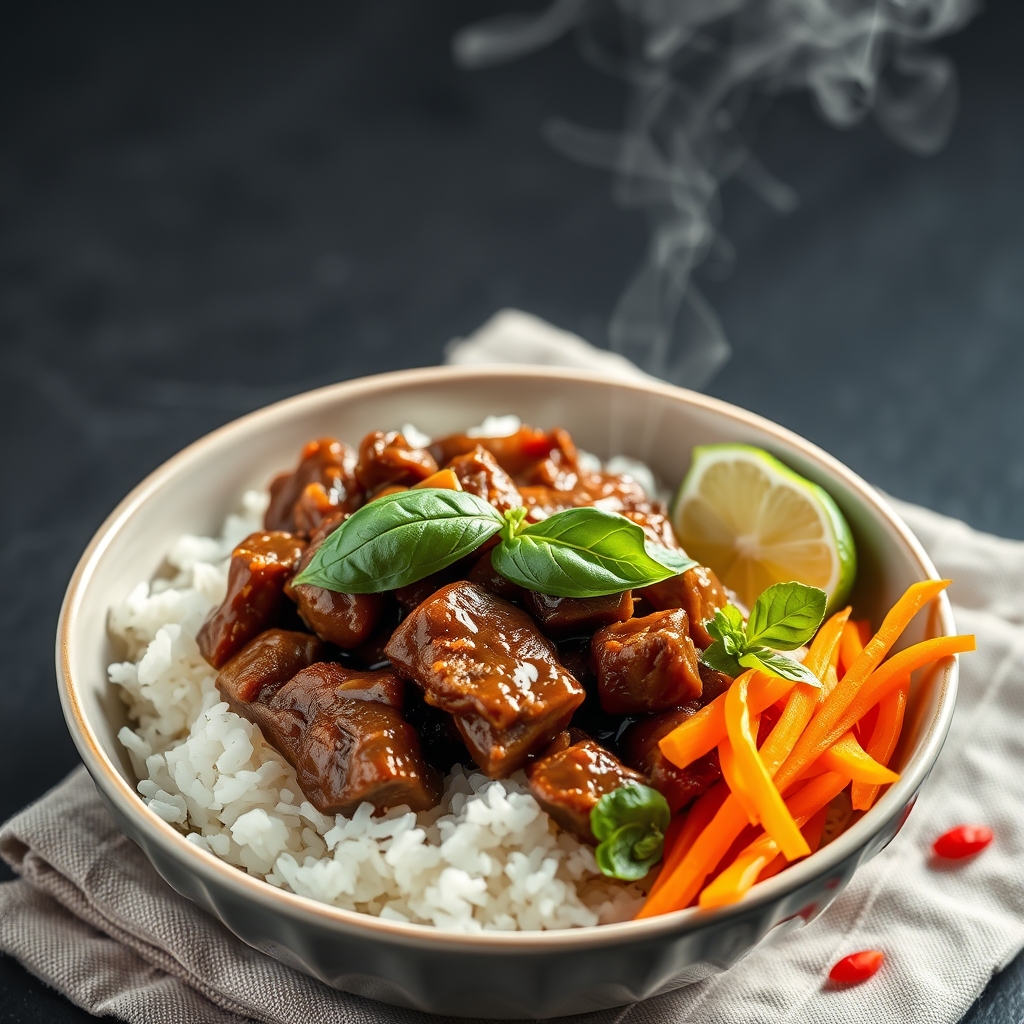
There are meals that feed you, and then there are meals that transport you. For me, Thai Basil Beef Bowls do the latter. I remember the first time I had a version of this dish—a tiny, steamy Bangkok soi where the wok’s fire roared and the aroma of holy basil and fish sauce clung to the air like a promise. The beef was lacquered with a dark, savory sauce, blistered long beans snapped under the wok’s heat, and the whole thing was piled high over jasmine rice. But what truly stole my heart was the side of pickled carrots—crunchy, tangy, and bright—cutting through the richness like a lightning bolt of flavor. That contrast, that yin-yang dance, is what this recipe is all about. It’s a bowl that doesn’t just satisfy hunger; it tells a story of balance, heat, and the perfect crunch.
Why This Recipe Works
The genius of this dish lies in two key techniques: the high-heat searing of the beef and the quick pickling of the carrots. When you cook thinly sliced beef over screaming-hot oil, you achieve the Maillard reaction—a complex browning that creates deep, savory umami notes. The sugar in the sauce caramelizes instantly, forming a sticky glaze that clings to every piece of meat without rendering it tough. Meanwhile, the quick pickled carrots rely on a simple vinegar-sugar-salt brine that, in just 30 minutes, transforms raw carrots into crunchy, tangy ribbons. The acid from the vinegar tempers the beef’s richness, while the sugar balances the heat from the bird’s eye chilies. It’s a precise interplay of heat, time, and chemistry that yields a bowl greater than the sum of its parts.
Ingredient Deep Dive
Beef: Flank steak or sirloin is ideal. Its moderate marbling provides enough fat to stay juicy under high heat, but it slices thin to cook in seconds. Holy Basil (Bai Gaprao): This is the soul of the dish. Its peppery, anise-like flavor is irreplaceable, but Thai basil or a mix of sweet basil and mint can substitute. Fish Sauce: The salty, pungent backbone of Thai cuisine. It adds depth and umami that soy sauce alone cannot replicate. Oyster Sauce: Thick, sweet, and savory, it provides body and a glossy finish. Bird’s Eye Chilies: Small but fiery; adjust to your heat tolerance. Garlic: A generous amount—8 to 10 cloves—forms the aromatic base. Carrots: Fresh, firm carrots are crucial for that satisfying crunch. Rice Vinegar: Milder than white vinegar, its subtle sweetness complements the pickling liquid. Palm Sugar (or Brown Sugar): Adds a complex sweetness that plain white sugar lacks. Jasmine Rice: Fragrant and fluffy, it’s the perfect canvas to soak up the savory sauce.
Masterclass Instructions
Step 1: Quick Pickle the Carrots
Peel 2 large carrots into ribbons using a vegetable peeler. In a bowl, combine ¼ cup rice vinegar, ¼ cup water, 2 tablespoons palm sugar (or brown sugar), and 1 teaspoon salt. Whisk until dissolved. Submerge the carrot ribbons and set aside for at least 30 minutes. Pro-Tip: For extra crunch, use a mandoline for evenly thin ribbons. The pickles will keep refrigerated for up to a week, but the texture is best within 24 hours.
Step 2: Prepare the Aromatics and Sauce
Thinly slice 8 garlic cloves and 4–6 bird’s eye chilies (seeds removed for less heat, if desired). In a small bowl, mix 2 tablespoons fish sauce, 2 tablespoons oyster sauce, 1 tablespoon soy sauce, 1 teaspoon brown sugar, and 2 tablespoons water. Set aside. Pro-Tip: The sugar helps balance the saltiness and promotes caramelization during cooking.
Step 3: Slice and Marinate the Beef
Place 1 pound flank steak in the freezer for 20 minutes before slicing—this firms it up for ultra-thin slices. Slice against the grain into ⅛-inch thick pieces. Toss with 1 tablespoon soy sauce, 1 teaspoon cornstarch, and a pinch of white pepper. Pro-Tip: Cornstarch not only tenderizes but also helps the sauce cling to the meat.
Step 4: Cook the Beef
Heat a wok or heavy skillet over high heat until smoking. Add 2 tablespoons vegetable oil, then swirl to coat. Add the beef in a single layer—do not overcrowd! Let sear undisturbed for 30 seconds, then toss. Cook for another 30–60 seconds until browned but still slightly pink. Remove and set aside. Pro-Tip: Work in batches if necessary. Overcrowding creates steam, not sear.
Step 5: Stir-Fry the Aromatics
Reduce heat to medium. Add 1 more tablespoon oil, then sauté garlic and chilies for 10 seconds until fragrant. Pro-Tip: Do not let garlic burn; it should turn golden and aromatic. If the wok seems dry, add a splash of water.
Step 6: Combine and Finish
Return the beef to the wok. Pour the sauce over and toss to coat. Cook for 30 seconds until sauce thickens and glazes the beef. Remove from heat. Stir in 2 cups fresh holy basil leaves, tossing until just wilted. Pro-Tip: Basil should be added off-heat to preserve its aromatic oils and texture.
Step 7: Assemble the Bowls
Spoon steamed jasmine rice into bowls. Top with the beef mixture. Drain the pickled carrots and arrange a generous bundle on the side. Garnish with extra basil leaves and a wedge of lime. Serve immediately. Pro-Tip: For an authentic touch, fry an egg sunny-side up and place it on top—the runny yolk enriches the dish.
Frequently Asked Questions
Q: Can I use a different protein?
A: Absolutely. Chicken, pork, or even firm tofu work well. Adjust cooking times accordingly—tofu should be seared until crisp on all sides.
Q: How to fix a runny sauce?
A: If your sauce seems thin after combining, mix 1 teaspoon cornstarch with 2 teaspoons cold water to make a slurry. Stir it in and cook for another 30 seconds until thickened.
Q: Can I freeze this dish?
A: The beef stir-fry freezes well for up to 3 months. Thaw overnight in the fridge and reheat in a hot wok. However, the pickled carrots are best fresh—they lose crunch after freezing.
Q: How to make it less spicy?
A: Use fewer bird’s eye chilies or remove seeds and membranes. For a milder kick, substitute with 1–2 serrano peppers.
Q: Is there a substitute for holy basil?
A: Thai basil is the closest. In a pinch, use a mix of sweet basil and a small sprig of mint to mimic the peppery notes.